Beyond Domestic Leaf: The Strategic Resurgence of Bangladesh’s Tea Export Industry
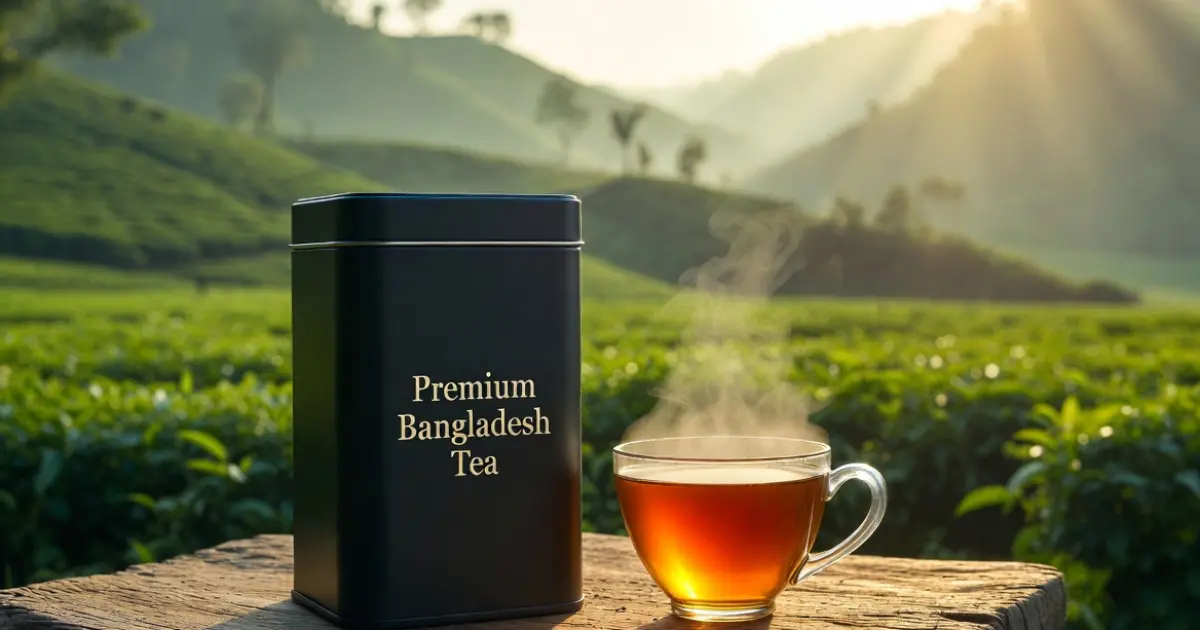
For decades, Bangladesh’s historic tea estates in Sylhet, Moulvibazar, and the emerging plains of Panchagarh operated under a predictable economic cycle: produce heavily, sell locally, and satisfy a massive, insatiable domestic caffeine demand. With domestic consumption hovering around 75,000 metric tons annually, global export took a back seat.
However, as the 2026–27 trading season kicks off with tea auctions across Chattogram, Srimangal, and Panchagarh, a structural shift is underway. Confronted by weather anomalies that capped last year’s production at 94.9 million kg against a higher target, the Bangladesh Tea Board has mapped out an ambitious strategy.
       [ Bangladesh Tea Sector Pivots ]

     Bulk Commodity             Premium Brand Value
  ───────────────────        ────────────────────────
  • Volatile Auction Price   • US$1.47M Led by SEYLON
  • High Mass Competition    • Focus on UAE, USA, & KSA
  • Weather Dependent        • Value-Add Packaged Blends
Moving Up the Value Chain: The Rise of Branded Exports
Historically, when Bangladesh exported tea, it did so primarily as a bulk commodity—raw unblended leaves shipped out at low margins to global blending centers. Today, the profit engine of Bangladesh’s tea export sector has fundamentally shifted toward branded, packaged value-add teas.
According to recent data from the National Board of Revenue (NBR), the corporate landscape has consolidated around highly competitive domestic consumer groups successfully exporting corporate-branded tea blends:
| Export Rank | Brand / Corporate Group | Export Share (%) | Major Markets |
| 1 | SEYLON (Abul Khair Group) | 42% | UAE, Middle East, USA |
| 2 | Finlay Tea | 26% | UK, GCC Nations |
| 3 | Ispahani Group | 11% | Global Diaspora, South Asia |
This shift toward corporate branding insulation-proofs Bangladeshi exporters against the volatile pricing of global bulk commodity auctions, allowing them to capture premium shelf space in high-purchasing-power regions like the Gulf Cooperation Council (GCC) and North America.
The Strategic Expansion of Smallholder Farms
While the sprawling, colonial-era corporate tea estates of the Balisera and Juri valleys in Greater Sylhet still contribute the vast majority of premium orthodox and CTC (Crush, Tear, Curl) teas, the driving force behind Bangladesh’s volume growth is the northern plain region.
Panchagarh and the Korotoya Valley now contribute roughly 17% to 18% of the nation’s total tea supply. By utilizing a modern smallholder farming model—where individual families cultivate small tracts of land and sell directly to regional bought-leaf processing factories—the region has drastically expanded the geographical footprint of Bangladeshi tea. This volume expansion ensures the domestic market remains fully supplied, freeing up premium, high-altitude Sylhet orthodox leaves explicitly for international buyers.
Overcoming Structural Bottlenecks
Despite the optimistic 104 million kg target for the current season, the path toward establishing Bangladesh as a consistent, top-tier global tea exporter requires resolving critical systemic challenges:
-
Climate Volatility: Erratic rainfall patterns and intense heatwaves during peak plucking months have increasingly interfered with yield cycles, requiring massive investments in modern estate irrigation and drought-resistant tea clones.
-
The Plain-Quality Price Trap: Global tea production of basic, low-grade CTC tea is growing faster than demand, creating a global structural surplus. For Bangladesh to stay competitive, estates must pivot toward specialty tea variants—such as organic green tea, white tea, and single-origin orthodox varieties.
-
Strict Regulatory Oversight: The Bangladesh Tea Board has aggressively ramped up enforcement to eliminate illegal smuggling and unregistered processing plants. Ensuring strict phytosanitary compliance is paramount to unlocking strict European and North American customs gateways.
The Outlook for 2026 and Beyond
Bangladesh stands at an actionable crossroads. The domestic auction market remains robust, with strong consumer demand fetching clearance rates of 65% to 80% at opening sales and average prices holding firm above Tk 250 per kg.
To transform this internal resilience into external economic strength, the nation’s tea strategy must focus cleanly on origin branding. Much like Sri Lanka successfully marketed “Ceylon Tea,” Bangladesh must capitalize on its rich, distinct regional flavor profiles. By pairing its world-class corporate packaging infrastructure with aggressive trade promotion at international food expos, Bangladesh is well-positioned to convert its humble agricultural leaf into a high-value, global diplomatic and commercial asset.
JAR Group Global Services
Integrated Maritime, Logistics, Recruitment, Trading and Consumer Brands.
🚢 JAR WORLD SHIPPING LINE
Port Agency, Shipping Agency, Vessel Operations, Chartering, Project Cargo and Maritime Services.
Visit Website📦 JAR WORLD LOGISTICS
International Freight Forwarding, Sea Freight, Air Freight, Customs Clearance and Global Logistics.
Learn More⚓ JAR WORLD MARINE
MLC Compliant Crew Recruitment, Marine Manning, Crew Management and Offshore Support.
Explore🌍 JAR LIMITED
International Trading, Consumer Brands, Tea, Import, Export and Global Business Development.
Visit Website